Hang Seng Index Component Stocks Expanded to 90, New Economy Weight Further Increased, Investment Ecology Faces Changes
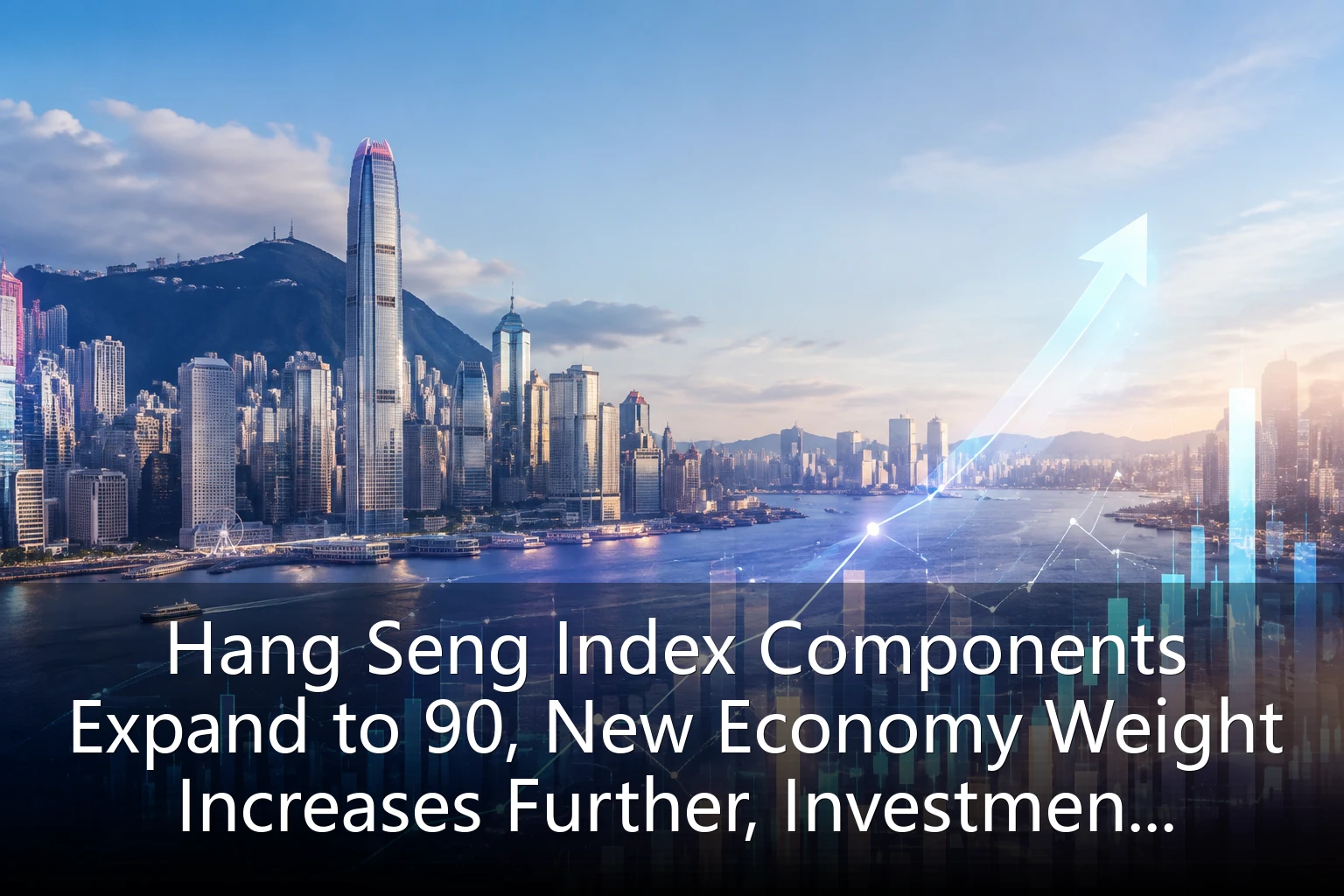
On September 29, 2026, Hang Seng Indexes Company Limited officially announced that the Hang Seng Index component stocks will expand from the original 80 to 90, marking the first component stock expansion adjustment for the Hang Seng Index since 2018. This adjustment not only broadens the index's coverage but significantly increases the weight of new economy enterprises, marking another important milestone in Hong Kong's capital market strategic layout for the "new economy." For investors, this adjustment will directly impact the Hang Seng Index's investment logic and market performance, bringing new opportunities and challenges.
Specific Content and Changes of Hang Seng Index Component Stock Adjustment
According to the announcement released by Hang Seng Indexes Company Limited, this adjustment mainly includes two major changes: first, the number of component stocks increases from 80 to 90, and second, the weight proportion of new economy enterprises increases from the original approximately 35% to 42%. Among the 10 newly added component stocks, 6 are from the technology industry, 2 from the healthcare sector, and 2 from the consumption upgrade sector, fully reflecting Hong Kong market's key focus on the new economy field.
In the adjusted Hang Seng Index component stocks, technology giants such as Tencent Holdings, Alibaba Group, and Meituan continue to maintain higher weights, while new technology enterprises like Xiaomi Corporation and Kuaishou Technology have also received higher allocation ratios. Although the traditional finance and real estate sector still occupies an important position, its weight has decreased from the original approximately 40% to around 35%, reflecting the optimization and transformation of market structure.
Strategic Considerations for Increased Proportion of New Economy Enterprises
The adjustment of Hang Seng Index component stocks this time is not accidental but an important part of Hong Kong's capital market overall strategic layout. In recent years, with the rapid rise of mainland technology companies and the continuous opening of Hong Kong's market, Hong Kong's unique advantage as a "super connector" has become increasingly prominent. The increase in new economy enterprise weight this time mainly involves three strategic considerations:
- Enhancing Index Representation: As the economic structure transforms, traditional economic indicators can no longer fully reflect the market's true performance. Including more new economy enterprises helps improve the Hang Seng Index's representation of the Hong Kong market.
- Attracting International Capital: Global investors' attention to new economy sectors such as technology and healthcare continues to increase. Increasing the weight of related enterprises helps enhance the Hang Seng Index's attractiveness to international capital.
- Promoting Market Diversification: By introducing more companies from different industries and scales, the impact of fluctuations in a single industry on the overall index can be reduced, improving market resilience.
Impact of Adjustment on Hang Seng Index Trend and Market Structure
Looking at historical data, component stock adjustments usually have a significant impact on the short-term trend of the Hang Seng Index. After this adjustment, the increased proportion of the new economy sector means that the volatility of the Hang Seng Index may increase, as technology stocks typically have higher volatility. However, this also brings greater growth potential to the index, especially against the backdrop of accelerating global digital transformation.
From a market structure perspective, this adjustment will further strengthen the "new