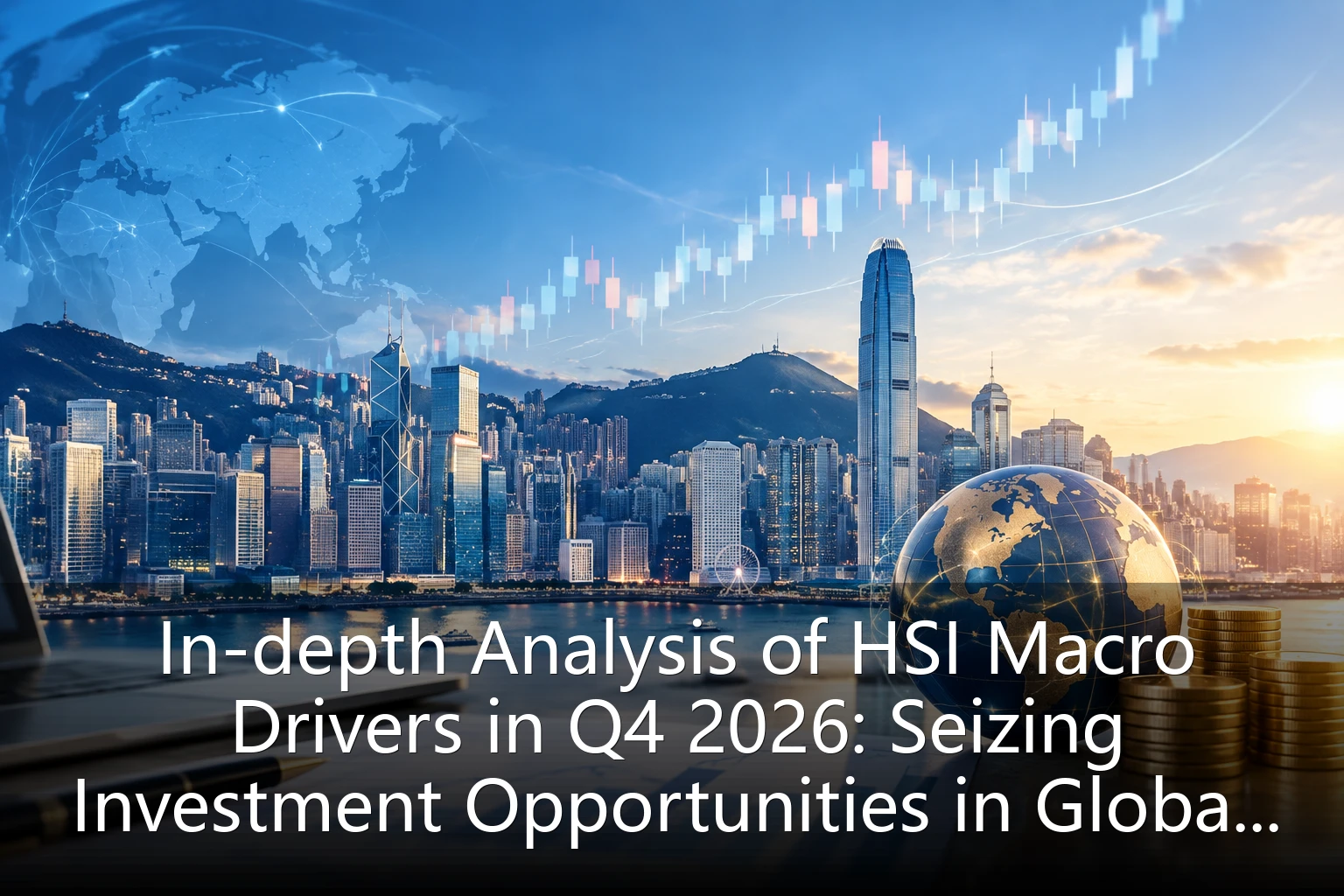
In-depth Analysis of HSI Macro Drivers in Q4 2026: Seizing Investment Opportunities in Global Transformations
As the core indicator of Hong Kong's stock market, the Hang Seng Index is influenced by multiple macro factors. Entering Q4 2026, the global economic landscape is undergoing profound adjustments, with geopolitical risks and cyclical economic fluctuations intertwined, bringing unprecedented challenges and opportunities to the HSI. This article will conduct an in-depth analysis of key macro drivers affecting the HSI trend from multiple dimensions including global economic conditions, China's policy direction, and monetary policy changes, providing investors with forward-looking market analysis and strategic references.
Reshaping of Global Economic Landscape: External Environment Analysis for HSI
In 2026, the global economy is in a structural adjustment period of the post-pandemic era. Although the US economy maintains resilience, the impact of high interest rates on the real economy is gradually becoming apparent, with consumer spending growth slowing and corporate investment becoming more cautious. The European economy faces growth bottlenecks under energy transition and geopolitical pressures, with sluggish manufacturing recovery. Regional differentiation within Asia is intensifying, with China and India becoming the main engines of regional growth, while traditional economies such as Japan and South Korea face dual challenges of population aging and industrial upgrading.
This global economic landscape has a profound impact on the Hang Seng Index. On one hand, the weakening trend of the US dollar provides a relatively favorable exchange rate environment for the Hong Kong stock market; on the other hand, expectations of slowing global economic growth lead to adjustments in international capital allocation strategies, and Hong Kong's attractiveness as an Asian financial center faces reassessment. Data shows that in the first three quarters of 2026, southbound funds continued to flow into Hong Kong stocks, with a cumulative net inflow exceeding 300 billion yuan, reflecting mainland investors' recognition of Hong Kong stock values.
China's Economic Policy Direction: Internal Driving Force for HSI
China's economy is in a critical stage of high-quality development, with policy direction becoming the core variable affecting the HSI trend. In Q4 2026, the Chinese government continues to implement proactive fiscal policy and prudent monetary policy, focusing on promoting the optimization and upgrading of the economic structure. The "14th Five-Year Plan" has entered its implementation phase, with strategic directions such as technological innovation, green and low-carbon development, and domestic demand expansion continuing to advance, bringing policy dividends to leading enterprises in related industries.
Specifically, under the "dual circulation" development pattern, the potential of the domestic market continues to be released, with consumption upgrading and industrial upgrading receiving equal emphasis, which will benefit the performance of consumption, technology, medicine and other sectors in the HSI. At the same time, the pace of financial opening-up has accelerated, the interconnection mechanism continues to deepen, and the scope of Hong Kong Stock Connect continues to expand, providing mainland investors with broader channels for Hong Kong stock allocation and enhancing the linkage between the HSI and the mainland market.
It is worth noting that 2026 marks the 30th anniversary of Hong Kong's return to the motherland. The HKSAR government has introduced a series of measures to promote economic development and financial center construction, including optimizing the business environment, attracting international talent, and promoting green finance development. These measures are expected to further enhance the international competitiveness of the Hong Kong market and provide long-term support for the HSI.
Monetary Policy Shift: Hong Kong Stock Market Liquidity and Valuation Restructuring
In 2026, global monetary policy has entered an adjustment cycle. After consecutive interest rate hikes, the Federal Reserve has begun to shift to a dovish stance, and the European Central Bank has also signaled policy easing. This change has a profound impact on the global liquidity landscape and brings new opportunities to the Hong Kong stock market.
From the perspective of the Hong Kong dollar exchange rate, under the linked exchange rate system, the Hong Kong dollar to US dollar exchange rate fluctuates within the range of 7.75-7.85, providing a stable exchange rate environment for the market. As the Federal Reserve's interest rate hike cycle ends, the interest rate differential between Hong Kong dollars and US dollars is expected to narrow, which will alleviate the pressure of capital outflow from Hong Kong and enhance the liquidity of the Hong Kong stock market.
For China, while maintaining the prudent tone of monetary policy, the central bank pays more attention to the use of structural tools to precisely support the real economy. This targeted easing policy is conducive to improving market liquidity expectations and enhancing the valuation level of Hong Kong stocks. Data shows that since 2026, the P/E ratio of the HSI has recovered from around 9 times at the beginning of the year to around 10.5 times, but it is still below the historical average, indicating that Hong Kong stocks still have valuation attractiveness.
Industry Rotation and Structural Opportunities: Differentiated Performance of HSI Constituent Stocks
Against the backdrop of changing macro environments, HSI constituent stocks show obvious industry rotation characteristics. In the first three quarters of 2026, technology, consumption, and medicine sectors performed relatively strongly, while traditional sectors such as finance and real estate faced adjustment pressure. Entering Q4, as economic recovery expectations strengthen, the industry rotation trend may continue.
In the technology sector, emerging fields such as artificial intelligence, cloud computing, and new energy continue to receive policy support and capital favor. Technology giants in HSI constituent stocks such as Tencent Holdings, Alibaba, and Meituan have maintained steady growth in performance with their innovation capabilities and global competitiveness, becoming an important force leading the HSI rebound. At the same time, the "Innovation and Technology Development Fund" and "Green Finance Fund" introduced by the HKSAR government also provide more financing channels for technology companies.
The consumption sector benefits from the mainland's consumption upgrading trend and the recovery of Hong Kong's tourism market. Constituent stocks in the HSI such as Anta Sports, Li Ning and other sportswear brands, as well as Chow Tai Fook, Lukfook Jewelry and other jewelry enterprises, have shown outstanding performance with their brand advantages and market expansion capabilities. With the implementation of measures to facilitate personnel exchanges between the mainland and Hong Kong, Hong Kong's retail market continues to recover, and the consumption sector is expected to receive further support.
After adjustments, the financial sector's valuation is at historical lows. As the mainland economy stabilizes and Hong Kong's financial market opening deepens, the profitability of financial institutions such as banks and insurance companies is expected to improve. Especially those Chinese financial institutions that actively expand wealth management and cross-border business, such as China Merchants Bank and Ping An Insurance, are expected to achieve valuation recovery in Q4.
Investment Strategy Recommendations: Seizing Structural Opportunities in HSI
Based on the analysis of macro drivers affecting the HSI, we provide the following investment strategy recommendations for Q4:
- Asset Allocation Strategy: It is recommended to adopt a "core + satellite" allocation strategy, with core assets allocated to blue-chip stocks with stable cash flow and dividend-paying capabilities, and satellite assets focusing on high-growth technology stocks and consumption stocks supported by policies. At the same time, appropriately allocate HSI ETFs and HSI futures to hedge against market volatility risks.
- Industry Selection: Focus on three major directions: technological innovation, consumption upgrading, and green and low-carbon development. Specifically, you can pay attention to high-growth industries such as artificial intelligence, new energy, biomedicine, and high-end manufacturing, as well as the consumer service sector benefiting from mainland consumption upgrading and Hong Kong tourism recovery.
- Risk Management: Given that global economic uncertainties still exist, investors are advised to control the proportion of single asset allocation, set stop-loss levels, and use derivatives such as options to hedge risks. At the same time, pay attention to geopolitical changes and global economic data, and adjust investment strategies in a timely manner.
- Hong Kong Stock Connect Investment: For mainland investors, the Hong Kong Stock Connect channel is an important way to allocate Hong Kong stocks. It is recommended to pay attention to the adjustment of Hong Kong Stock Connect constituent stocks and seize new investment opportunities. At the same time, pay attention to Hong Kong Stock Connect trading rules and exchange rate risks, and reasonably control the investment proportion.
Conclusion: Seizing Long-term Value Investment Opportunities in HSI
In Q4 2026, under the influence of multiple factors such as global economic adjustments, China's economic transformation and upgrading, and changes in the monetary policy environment, the Hang Seng Index will show a trend of fluctuating upward. Although market volatility may increase in the short term, Hong Kong's position as an international financial center remains stable in the medium to long term, and the HSI still has long-term investment value.
For investors, seizing investment opportunities in the HSI requires a deep understanding of macro drivers, attention to industry rotation trends, and the adoption of scientific asset allocation strategies. In an environment of increasing uncertainty, value investment and long-term investment concepts are particularly important. Investors are advised to remain rational, avoid chasing gains and selling at losses, and select high-quality enterprises with core competitiveness through in-depth research to share the dividends of China's economic transformation and upgrading and the development of Hong Kong's financial market.
Looking ahead, as China's economy continues to develop with high quality and Hong Kong's financial market continues to open up, the HSI is expected to play a more important role in the global index system. Investors should pay close attention to policy changes and market dynamics, seize structural opportunities, and achieve steady growth of assets.