Deepening the Connect Hong Kong Program: Analyzing New Investment Opportunities in the Hang Seng Index
Against the backdrop of accelerating global capital flows, Hong Kong's stock market, with its unique institutional advantages, continues to attract global investors' attention. As a key bridge connecting the mainland and Hong Kong capital markets, Connect Hong Kong has become an important channel for investors to position themselves in Hong Kong stocks since its launch. In August 2026, the Hong Kong Exchanges and Clearing Limited (HKEX) further optimized the Connect Hong Kong mechanism. The implementation of the new regulations not only enhanced market liquidity but also strengthened the appeal of the Hang Seng Index (HSI) as Hong Kong's core benchmark. This article will deeply analyze how the new Connect Hong Kong regulations deepen cross-border connectivity, explore the investment value of the HSI, and reveal the unique advantages of Hong Kong's stock market, providing investors with a practical guide to seize new opportunities in global capital allocation.
I. New Connect Hong Kong Regulations: Deepening the Cross-Border Connectivity Mechanism
Since its launch in 2014, Connect Hong Kong has gradually become one of the main channels for mainland investors to invest in Hong Kong stocks. In August 2026, HKEX announced multiple new regulations aimed at further optimizing the Connect Hong Kong mechanism. The new regulations include: expanding the range of investable securities to include more new economy enterprises; lowering the ETF inclusion threshold to facilitate investors' access to index funds via Connect Hong Kong; and optimizing the trading and settlement processes to improve capital efficiency. These adjustments not only simplified the investment process but also enhanced market liquidity, injecting more vitality into HSI constituent stocks.
Specifically, the new regulations allow more new economy companies listed in Hong Kong to be included in the Connect Hong Kong list, helping investors capture investment opportunities in high-growth sectors such as technology and new energy. Meanwhile, the lower ETF inclusion threshold enables mainland investors to more conveniently allocate to HSI ETFs via Connect Hong Kong, thereby diversifying risks and obtaining market average returns. Additionally, the optimization of trading and settlement processes reduces the time funds are in transit, improving investment efficiency, which is particularly suitable for high-frequency trading and institutional investors.
II. The Hang Seng Index: Hong Kong's Core Benchmark
The Hang Seng Index (HSI) is the most representative benchmark index of Hong Kong's stock market, covering 45 constituent stocks across multiple industries including finance, technology, consumer, and energy. As Hong Kong's "barometer," the HSI not only reflects the overall market performance but also embodies the structural characteristics of Hong Kong's economy through the weight distribution of its constituent stocks. Most HSI constituent stocks are industry leaders with high liquidity and stability, serving as an important reference for investors to assess Hong Kong's stock market performance.
The HSI's calculation method uses free-float market capitalization weighting to ensure the index truly reflects market dynamics. In recent years, the HSI has continuously adjusted its constituent structure, increasing the weight of new economy enterprises to adapt to economic transformation. For example, in 2025, the HSI expanded its constituent stocks to 90, with the weight of new economy enterprises increasing, further strengthening its position as a global capital allocation tool. The HSI has a high degree of internationalization, attracting a large number of international investors, and its volatility is relatively low, making it suitable for long-term investment.
III. The Linkage Effect Between Connect Hong Kong and the Hang Seng Index
The linkage effect between Connect Hong Kong and the HSI is significant, mainly reflected in capital flows and price transmission. Through Connect Hong Kong, mainland investors can directly invest in HSI constituent stocks, thereby affecting the HSI's trend. In recent years, southbound funds have continued to flow into Hong Kong, becoming an important supporting force for the HSI. According to statistics, in the first half of 2026, southbound funds net inflows into HSI constituent stocks exceeded HK$80 billion, with technology and financial sectors accounting for the largest share. This capital inflow not only pushed up the prices of related stocks but also drove the overall rise of the HSI.
The implementation of the new Connect Hong Kong regulations further strengthened this linkage. The newly included securities and ETFs expanded investment choices, attracting more mainland capital inflows. For example, after the new regulations were implemented, the trading volume of HSI ETFs increased significantly, and the scale of mainland investors allocating to HSI ETFs via Connect Hong Kong reached a new high. This linkage effect not only enhanced the liquidity of the HSI but also strengthened its appeal as a global capital allocation tool.
IV. Hong Kong's Unique Advantages: Reflected Through Connect Hong Kong and the Hang Seng Index
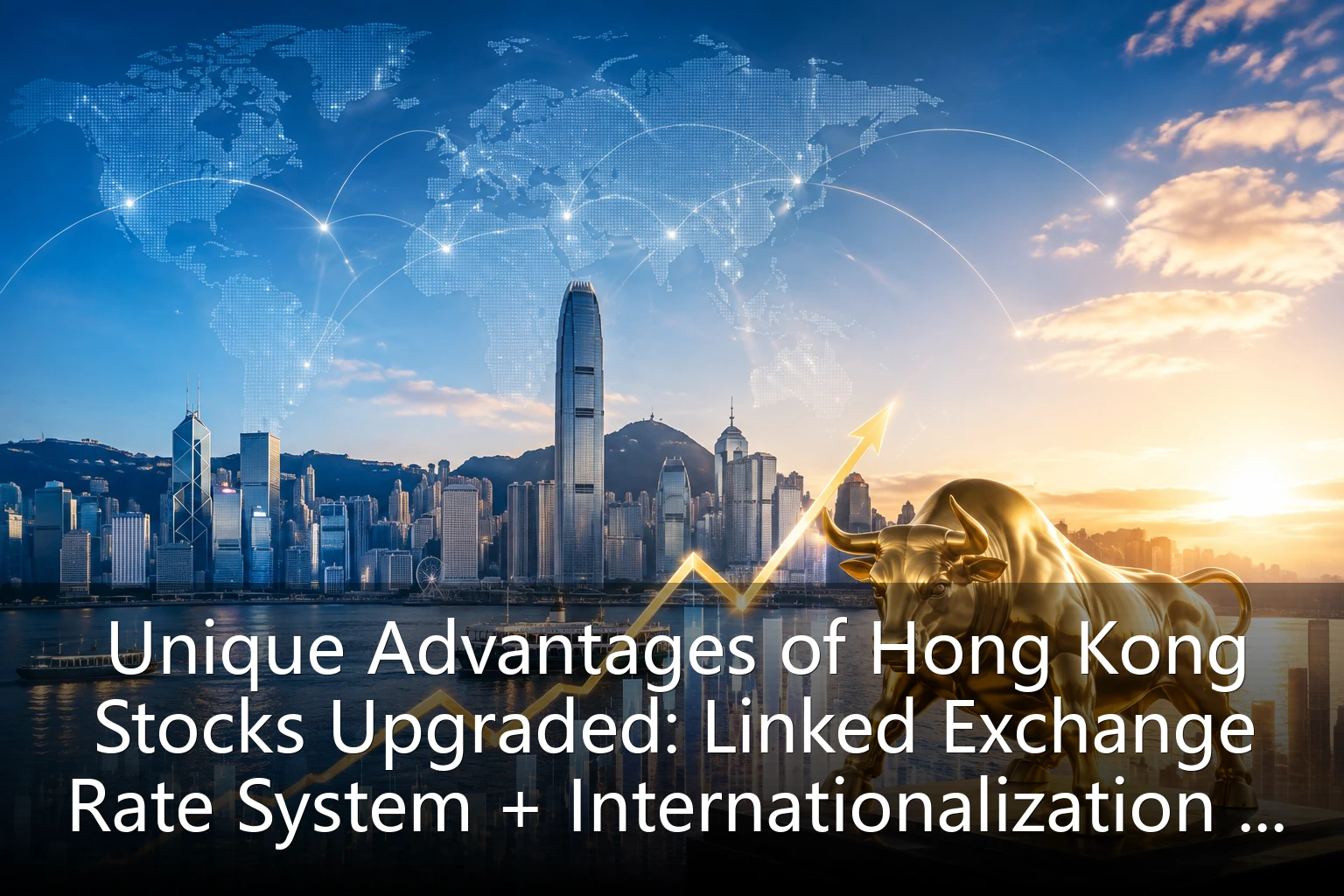
The unique advantages of Hong Kong's stock market lie in its institutional stability and high degree of internationalization, which are fully reflected through the linkage between Connect Hong Kong and the HSI.
- Stability of the Linked Exchange Rate System: Hong Kong implements a linked exchange rate system, pegging the Hong Kong dollar to the US dollar to ensure currency stability. This system reduces exchange rate risks and attracts international capital inflows. Most HSI constituent stocks are denominated in Hong Kong dollars, and mainland investors can avoid the uncertainty of exchange rate fluctuations when investing via Connect Hong Kong.
- High Participation in the Internationalized Market: As an international financial center, Hong Kong attracts global investors. International investors account for a high proportion of HSI constituent stocks, and the market has great depth. Connect Hong Kong provides mainland investors with a convenient channel to participate in the internationalized market, allowing them to share the returns of global capital allocation by investing in the HSI.
- Flexible Trading Mechanism: Hong Kong's stock market supports T+0 trading and short-selling mechanisms, providing more investment strategy choices. HSI constituent stocks have high liquidity, suitable for short-term trading and arbitrage operations. The implementation of the new Connect Hong Kong regulations further improves trading efficiency, enabling mainland investors to more flexibly utilize these mechanisms.
- Diverse Industry Leaders: HSI constituent stocks cover multiple industries, including finance, technology, and consumer, providing rich investment choices. New economy enterprises newly included in Connect Hong Kong, such as internet and new energy companies, further enrich the investment portfolio, meeting the needs of investors with different risk preferences.
V. Investment Opportunities: How to Invest in the Hang Seng Index Using Connect Hong Kong
The new Connect Hong Kong regulations provide investors with more opportunities to invest in the HSI. Here are some practical strategies:
- Allocate to HSI ETFs: Investing in HSI ETFs via Connect Hong Kong allows investors to obtain market average returns at a low cost. Popular HSI ETFs include the Tracker Fund of Hong Kong (2800.HK) and the Hang Seng ETF (2823.HK). The new regulations have lowered the ETF inclusion threshold, making it more convenient for mainland investors to allocate.
- Focus on Constituent Stock Rotation: HSI constituent stocks are adjusted periodically, and newly included securities often have high growth potential. Investors can pay attention to constituent stock changes and adjust their portfolios in a timely manner. For example, in the 2026 HSI constituent stock adjustment, several technology companies were included, and investors can focus on allocating to these stocks.
- Utilize Volatility Trading: Hong Kong's flexible trading mechanism allows investors to engage in volatility trading. Through options or bull/bear contracts, risks can be hedged or profits can be sought. The HSI has relatively low volatility, suitable for long-term holding, but short-term fluctuations also provide trading opportunities.
- Dividend Investment Strategy: Among HSI constituent stocks, high-dividend stocks such as banks and utility companies provide stable returns. The new Connect Hong Kong regulations have optimized dividend tax treatment, and mainland investors investing in high-dividend stocks via Connect Hong Kong can enjoy tax benefits, enhancing investment returns.
VI. Challenges and Risks
Although Connect Hong Kong and the HSI offer many investment opportunities, investors still need to be aware of potential risks:
- Market Volatility Risk: The HSI is greatly affected by global macroeconomic factors, such as changes in Federal Reserve policies and geopolitical events, which may lead to price fluctuations. Investors need to manage risks effectively and avoid over-concentration of investments.
- Liquidity Risk: Although Connect Hong Kong has improved liquidity, some small-cap stocks or new economy enterprises may have insufficient liquidity and higher trading costs. Investors should choose liquid securities to avoid liquidity risks.
- Regulatory Policy Changes: The rules for Connect Hong Kong and the HSI may be adjusted, such as the implementation of new regulations or constituent stock adjustments. Investors need to pay close attention to policy changes and adjust their investment strategies accordingly.
- Exchange Rate Risk: Although the linked exchange rate system is stable, fluctuations between the Hong Kong dollar and the RMB may still affect investment returns. Investors can use hedging tools to reduce exchange rate risks.
VII. Conclusion
The deepening of the new Connect Hong Kong regulations further strengthens Hong Kong's cross-border connectivity mechanism, providing new opportunities for HSI investment. Through Connect Hong Kong, mainland investors can conveniently participate in the internationalized market and share the growth dividends of HSI constituent stocks. Hong Kong's unique advantages, such as the stability of the linked exchange rate system, high degree of internationalization, and flexible trading mechanism, make it an important destination for global capital allocation. However, investors need to fully recognize risks and formulate reasonable investment strategies to seize opportunities in a volatile market. In the future, as more new economy enterprises are included in the HSI, Connect Hong Kong will continue to play a bridging role, providing investors with richer investment choices.