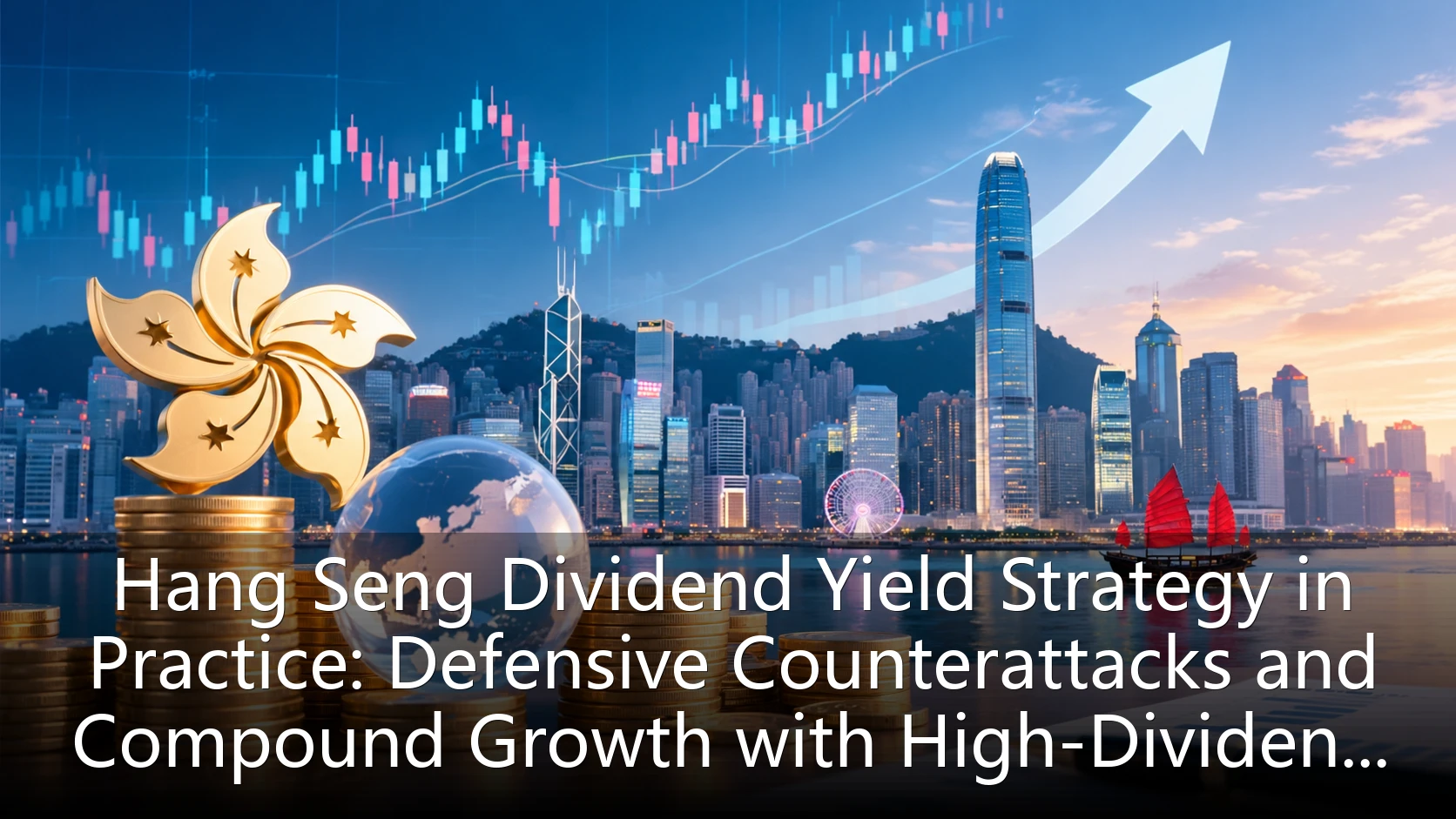
As Q4 begins, the Hong Kong stock market has once again entered a typical tug-of-war between bulls and bears: on one hand, global monetary policy paths, geopolitics, and external market volatility keep the Hang Seng Index swinging back and forth; on the other, Hong Kong stocks, with valuations in the lower end of their historical range, continue to show rising relative appeal in dividend returns. For investors focused on the Hang Seng, rather than frequently trading short-term swings in an unclear market, it is wiser to turn to a long-proven defensive tool—the Hang Seng dividend yield strategy. This article systematically breaks down how to apply this strategy in current conditions across four dimensions: seasonal logic, sector scanning, portfolio construction, and risk control.
1. Why Q4 Is Often the Home Turf of High-Dividend Strategies
Historically, Q4 market style typically shows two features: first, toward year-end, institutional funds tend to lock in gains, risk appetite declines, and high-dividend assets with stable cash flows and transparent valuations more easily attract incremental allocations; second, as Q3 earnings reports wrap up, market expectations for full-year performance and payout capacity gradually become clear, kicking off valuation-switch rallies, and companies with sustained dividend capacity are often the first to be repriced.
Moreover, after incorporating more traditional high-yield heavyweight sectors, the Hang Seng Index itself now offers dividend returns clearly higher than most major global indices. This means that even if the index moves sideways in the short term, investors can still accumulate compounding returns through constituent dividends, enjoying the certainty that time brings—one of the unique structural advantages that set Hong Kong stocks apart from other markets.
2. Sector Scan: Which Sources of High Dividends Can Truly Stand the Test
Banking and Insurance
The financial sector has always been the backbone of Hong Kong stock dividends. Chinese bank stocks have long traded below book value with stable dividend policies, making them core holdings for long-term southbound capital; insurance stocks offer both dividends and investment-side elasticity. Net interest margin trends and asset quality changes deserve close tracking, as they underpin dividend sustainability.
Energy and Utilities
Oil and gas, power, and gas utilities boast ample cash flows and relatively small operational swings, with payout records often spanning multiple economic cycles. Utility assets carry bond-like characteristics and tend to attract safe-haven capital when expectations of falling rates intensify.
Telecom and Carriers
The telecom industry has a mature business model, has passed its capex peak, and sees steadily improving free cash flow that supports high payouts—a classic cash cow allocation direction, suitable as one of the main sources of stable cash flow in a portfolio.
REITs and Real Assets
Real estate investment trusts are known for mandatory distribution mechanisms that complement ordinary stock dividends. Note, however, that their prices are more rate-sensitive, with volatility between stocks and bonds, making them better suited as a supplement to dividend income rather than a core position.
3. Build Your Own Dividend Income Portfolio in Four Steps
- Step 1: Quantitative screening. Key metrics include dividend yield, payout ratio, free cash flow coverage, and years of consecutive dividends. Ideal candidates should combine a high yield with a non-excessive payout ratio, avoiding companies that trade operational safety for high payouts.
- Step 2: Cross-sector diversification. Dividend sources within a single sector are vulnerable to cyclical shocks hitting together; allocate evenly across low-correlation sectors such as financials, energy, utilities, and telecom to reduce overall cash flow volatility in the portfolio.
- Step 3: Time your entries. Although the high-dividend strategy leans defensive, entry points still matter. Combined with Hang Seng technical analysis, build positions in batches when the index pulls back to key support or sector rotation signals appear, rather than going all in at once.
- Step 4: Dynamic rebalancing. Quarterly or after each ex-dividend peak, review each holding's payout capacity and valuation, remove pseudo high-yield stocks with deteriorating fundamentals, and shift capital toward higher dividend quality.
4. Beware of Three Common Dividend Traps
- One-off dividend trap: Some companies pay special dividends by selling assets or tapping reserves; the headline yield looks stunning but is unsustainable. Investors must look through the financials to identify the true source of payout funds.
- Cyclical peak trap: In highly cyclical industries, yields look highest at the top of the cycle, but payouts often shrink sharply once earnings fall back. An abnormally high yield may itself be a risk signal—beware the inversion of high dividends with high risk.
- Leveraged dividend trap: Companies that keep leverage rising while maintaining high dividends are effectively propping up their share price through payouts. Once financing conditions tighten, dividends and share prices may suffer together; decisively avoid such names.
5. Synergy Between the Dividend Strategy and Hang Seng Market Outlook
From a market outlook perspective, the dividend income strategy is not opposed to market timing but complementary: when the Hang Seng Index is in a rangebound or downward-pressure zone, high-dividend assets provide a floor of reliable cash flow that markedly improves the holding experience; when the index confirms a trend reversal and market risk appetite recovers, part of the position can shift toward more elastic growth and cyclical sectors, forming a barbell structure with dividends as the base and elasticity for offense. This allocation locks in base returns without giving up excess returns in trending markets.
For retail investors without the bandwidth for single-stock research, high-dividend index products or ETFs offer an alternative; their rule-based constituent rebalancing helps avoid single-stock dividend traps to some extent while lowering tracking costs. Whichever path you choose, the core principle never changes: anchor on dividend quality, set the pace by where the market stands, and let reliable cash flow be the foundation that carries you through the year's volatility.
Overall, in a Q4 market lacking clear direction, the Hang Seng dividend yield strategy offers a path to winning through stability. It does not chase short-term windfalls, yet it steadily builds a margin of safety in choppy markets and captures structural opportunities during valuation switches and style rebalancing. For Hong Kong stock investors who prioritize risk control, before patiently waiting for the index's direction to become clear, solidifying a high-dividend base position and strengthening the portfolio's defenses may be the most worthwhile strategic homework right now.