On August 6, 2026, one week after the official launch of the Hong Kong Exchanges and Clearing Limited (HKEX) next-generation trading system, market trading activity has significantly increased. Data shows that the Hang Seng Index turnover exceeded HK$200 billion today, hitting a two-month high, with the share of quantitative fund trading jumping from 18% at the beginning of the year to 27%. This change marks that the unique advantages of the Hong Kong stock market in terms of trading mechanisms—T+0 intraday trading and a well-established short-selling mechanism—are attracting global quantitative investment institutions to accelerate their deployment, further consolidating Hong Kong's status as an international financial center.
HKEX New System: Dual Upgrade of T+0 and Short-Selling Mechanisms
The next-generation trading system launched by HKEX at the end of July 2026 has increased order processing speed to the microsecond level and optimized the underlying architecture of the short-selling mechanism. The new system supports more flexible order types, including iceberg orders and hidden orders, which are commonly used strategy tools by quantitative funds. It also expanded the list of short-sellable stocks to 1,200, covering about 95% of the Hang Seng Composite Index constituents. This move directly reduces trading friction costs for quantitative funds, enabling strategies such as high-frequency trading and statistical arbitrage to be executed more efficiently in the Hong Kong stock market.
Unlike the T+1 system in the A-share market, Hong Kong stocks allow investors to sell shares immediately after buying them on the same day (T+0). This mechanism provides great flexibility for short-term traders. Quantitative funds utilize the T+0 feature to enter and exit the same target multiple times within a day, capturing intraday volatility to achieve excess returns. The short-selling mechanism allows investors to borrow and sell stocks when they expect a price decline, then buy them back to close the position after the price drops. This two-way trading capability ensures that the Hong Kong stock market maintains liquidity in both bull and bear markets, avoiding the risk of liquidity drying up in a one-sided market.
Li Ming, an analyst at the Singapore Exchange, stated: "The launch of HKEX's new system has brought Hong Kong stock trading efficiency close to that of the US market. However, compared to the US market, Hong Kong stocks have lower transaction costs and a more relaxed regulatory environment, which holds unique appeal for global quantitative funds."
Global Quantitative Funds Flood In: Data Perspective on Capital Flows
According to the latest data disclosed by HKEX, in July 2026, the trading volume of quantitative funds in the Hong Kong stock market reached HK$1.2 trillion, a year-on-year increase of 45% and a month-on-month increase of 22%. Among them, quantitative funds from North America contributed about 40% of the trading volume, European funds accounted for 30%, and Asia-Pacific local funds accounted for 30%. These funds mainly employ the following three types of strategies:
- Statistical Arbitrage Strategy: Exploiting price differences between Hong Kong stocks, A-shares, and US stocks for cross-market arbitrage, with a particular focus on opportunities arising from fluctuations in the AH premium index.
- Event-Driven Strategy: Conducting short-term trading around events such as Hong Kong stock company earnings releases, dividend ex-dates, and index constituent adjustments. The T+0 mechanism allows funds to enter and exit multiple times on the event day.
- Volatility Trading Strategy: Constructing volatility arbitrage portfolios using Hang Seng Index options and callable bull/bear contracts, hedging directional risk through the Hong Kong stock short-selling mechanism.
It is noteworthy that southbound funds also play an important role in quantitative trading. Through the Stock Connect mechanism, mainland investors can directly participate in Hong Kong stock trading via Shanghai-Hong Kong Stock Connect and Shenzhen-Hong Kong Stock Connect, enjoying the convenience of T+0. In the first five trading days of August 2026, the average daily net inflow of southbound funds was approximately HK$5 billion, with about 30% flowing into highly liquid technology and financial stocks, which are precisely the key trading targets for quantitative funds.
Linked Exchange Rate System: A Reassurance for Quantitative Funds
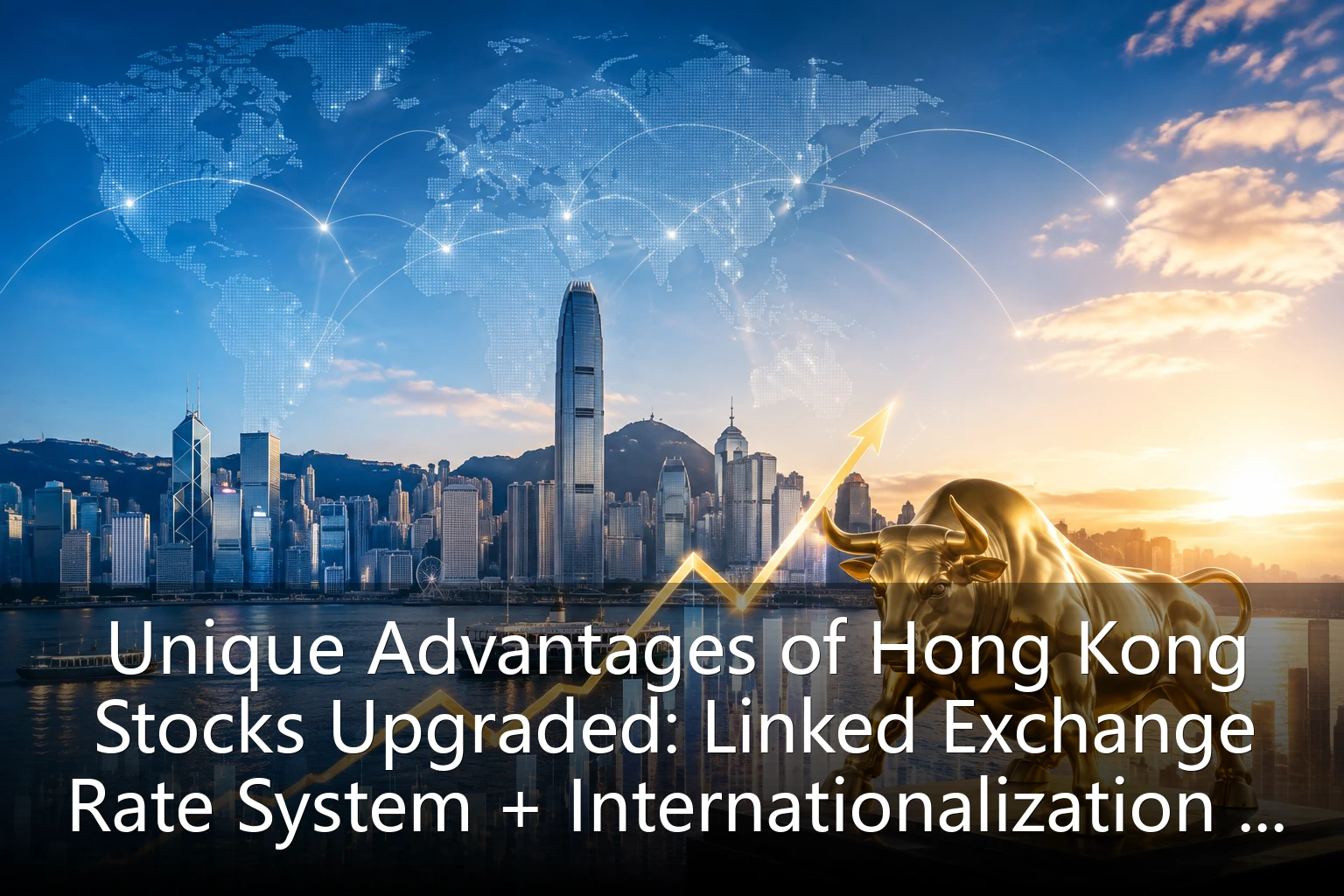
The core of Hong Kong stocks' unique advantage lies in the linked exchange rate system. Since 1983, the Hong Kong dollar has maintained a fixed exchange rate with the US dollar (7.75-7.85 HKD to 1 USD). This system provides exchange rate stability for international investors and reduces the foreign exchange risk of cross-border capital flows. Quantitative funds often need to enter and exit the market frequently, and exchange rate fluctuations can directly erode returns. The linked exchange rate system makes the Hong Kong stock market one of the few global markets that combines high liquidity with exchange rate stability.
In contrast, although the Singapore dollar also adopts a managed floating exchange rate system, its fluctuation band is wider, and the Singapore Exchange's trading mechanism is primarily based on T+2 settlement, with T+0 only applicable to some derivatives. Hong Kong stocks clearly lead in trading flexibility. Furthermore, foreign participation in the Hong Kong stock market is as high as over 40%, compared to about 25% for the Singapore stock market. This makes Hong Kong stocks more reflective of global capital flow trends, providing richer market signals for quantitative strategies.
Stock Connect Mechanism: A Unique Channel for Mainland Investors
For mainland investors, Stock Connect is the main channel for participating in Hong Kong stock T+0 and short-selling mechanisms. The new Stock Connect regulations effective in August 2026 further lowered the threshold for ETF inclusion, allowing mainland investors to purchase ETFs tracking the Hang Seng Index, Technology Index, etc., through Stock Connect, indirectly enjoying the convenience of T+0 trading. At the same time, Stock Connect targets cover new economy leaders such as Tencent, Alibaba, and Meituan, which have high liquidity and moderate volatility, making them ideal targets for quantitative strategies.
However, mainland investors should note that Stock Connect transactions involve currency conversion costs (between RMB and HKD), and the short-selling mechanism only applies to some stocks within the Stock Connect targets. It is recommended that novice investors start with ETFs, gradually familiarize themselves with T+0 trading rules, and then attempt individual stock short-selling strategies.
Risk Warning and Future Outlook
Although the advantages of Hong Kong stock T+0 and short-selling mechanisms are significant, the accelerated influx of quantitative funds also brings the risk of increased market volatility. On August 6, 2026, the Hang Seng Index surged to 22, 200 points in early trading, then fell back to 21, 850 points under pressure from quantitative fund profit-taking, with an amplitude of 1.6%. Investors should pay attention to the following risks:
- The short-selling mechanism may exacerbate stock price declines, especially prone to stampedes during market panic.
- T+0 trading may lead to overtrading, increasing transaction costs and the risk of emotional decision-making.
- High-frequency trading by quantitative funds may amplify market volatility, and ordinary investors need to set stop-loss strategies.
Looking ahead, with the continuous optimization of HKEX's next-generation trading system and the further deepening of the Stock Connect mechanism, the attractiveness of the Hong Kong stock market to global quantitative funds is expected to strengthen further. Institutions predict that the share of quantitative funds in Hong Kong stock trading will rise to over 30% in the second half of 2026, which will push Hong Kong stock liquidity to a new level while also placing higher demands on investors' risk management capabilities.
For investors focusing on the unique advantages of Hong Kong stocks, understanding the synergistic effect of T+0, the short-selling mechanism, and the linked exchange rate system is key to grasping investment opportunities in the Hong Kong market. Whether for short-term traders or long-term allocation funds, Hong Kong stocks offer a global investment platform that combines efficiency, stability, and diversity.