Hong Kong Stocks Morning Weakens: Tech Divergence Intensifies, Sector Rotation Hides Sentiment Shift
On July 13, the Hong Kong stock market showed a trend of rising first and then falling in the morning. In early morning, the Hang Seng Index fluctuated at highs, but with short-term profit-taking surging, the index then plunged and remained at low levels before noon. As of midday, the Hang Seng Index stood at 24,148.53 points, down slightly by 0.11%; the Hang Seng Tech Index performed relatively weak, dropping 0.81% to 4,683.65 points; the H-shares Index edged up 0.12% to close at 8,048.44 points; the Red Chip Index also rose marginally by 0.02% to 3,851.74 points.
From an overall perspective, after rebounding in the previous period, the Hong Kong stock market is now facing a window of directional choices. Uncertainty in external markets, fluctuations in the Renminbi exchange rate, and intertwined international geopolitical risks have made investor sentiment cautious.
Tech Stocks Lead Decline: Significant Intra-Sector Divergence
As the core of Hong Kong stock market value in this round, the tech sector showed obvious divergence today. Among large-cap tech stocks, Alibaba rose slightly by 0.91%, JD.com increased by 1.54%, Xiaomi Group edged up 0.31%, and Kuaishou gained 0.79%, indicating that some leaders remain resilient. However, Tencent Holdings fell 0.13%, NetEase dropped 0.39%, Meituan declined significantly by 2.03%, and Bilibili fell 1.58%, reflecting growing market concerns about the future profit prospects of some high-valuation tech platforms.
It is worth noting that this divergence in tech stocks is not accidental. Against the backdrop of tightening global interest rate environment and continuous evolution of regulatory policies, market funds are shifting from a "storytelling" logic to a "looking at profit" reality. The declines in Meituan and Bilibili essentially reflect the market's repricing of their profit paths and business model sustainability. This is highly synchronized with the recent performance of the US tech sector.
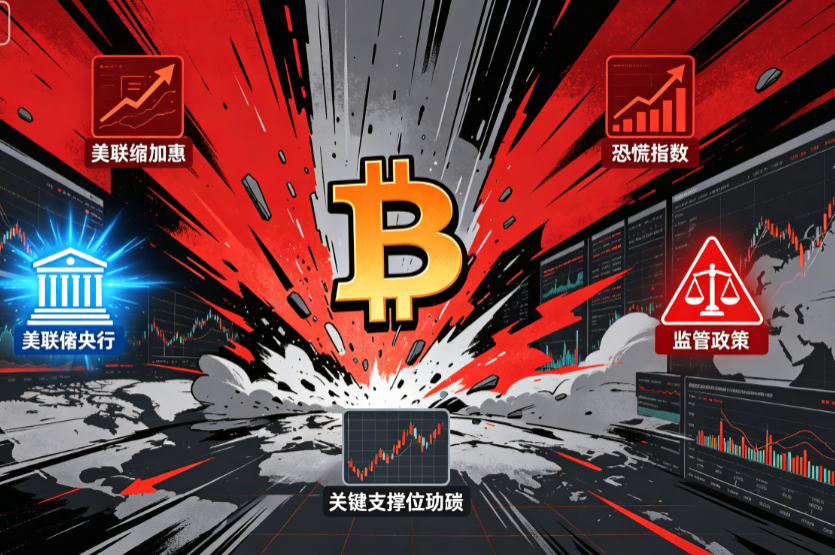
As shown in the figure above, the recent depreciation of the Renminbi exchange rate, coupled with sharp fluctuations in risk assets like Bitcoin, jointly constitute a dual pressure on tech stock valuations. Exchange rate depreciation means the attractiveness of China's tech stocks priced in US dollars declines, while Bitcoin's sharp volatility reflects a rapid contraction in global risk appetite. These two often occur simultaneously, and the underlying logic is that when the market is uncertain about the economic outlook, high-valuation, high-growth tech stocks are often the first to suffer.
Sector Rotation: Oil Stocks Active Against Trend, Semiconductors Hit Hard
In stark contrast to the divergence in tech stocks, traditional cyclical sectors performed actively today. Oil stocks took the lead, with PetroChina rising over 1%, driving the energy sector overall. The rise in oil stocks is mainly supported by high international oil prices and the continuous advancement of China's energy security strategy. Against the macroeconomic background of weak domestic demand and pressured external demand, the energy sector, with its stable cash flows and high dividend yields, is becoming an important choice for funds to avoid risks.
Bank stocks and catering stocks also generally active, indicating market funds are shifting to undervalued, stable-earning sectors. This rotation from growth to value is usually a signal of conservative market sentiment.
However, PCB concept stocks and the semiconductor sector faced obvious selling pressure. Kingboard Laminates fell over 15% in a single day, shocking the market. As an important part of the PCB industry chain, the sharp decline of Kingboard Laminates reflects the dual dilemma of weak downstream demand and high industry inventory. Meanwhile, GigaDevice fell over 10%, and optical communication concept stocks also declined. The continued adjustment of the semiconductor sector is closely related to the cyclical decline in global chip demand and the uncertainty of Sino-US tech competition.
Individual Stock Anomaly: Extreme Quotes Signal
Sharp fluctuations at the individual stock level often provide investors with more direct market judgment basis. Kingboard Laminates' single-day drop of over 15% is extremely rare. The stock had accumulated certain gains due to the previous expectation of PCB prosperity. Today's significant pullback could well be the result of institutional rebalancing, downward revision of earnings expectations, and market sentiment resonance. Investors should be alert that such a single-day crash may signal that the industry cycle turning point has arrived.
GigaDevice, as a representative of A+H semiconductor leaders, its decline amplitude is also noteworthy. The adjustment of the semiconductor sector is not an isolated event but the result of multiple factors: the global tech cycle downturn, weakening domestic substitution, and valuation regression. For investors, the current operational focus should not be blindly bottom-fishing, but waiting for industry clearance signals and confirming fundamental bottom before positioning.
Conclusion: Seeking Certainty in a Volatile Market
Overall, the performance of Hong Kong stocks on the morning of July 13 reflects the current complex sentiment of the market. On one hand, the expectation of economic recovery still exists, and the activity of traditional sectors like oil, banks, and consumption indicates that funds' preference for defensive assets is rising; on the other hand, the divergence of tech stocks, heavy decline in semiconductors, and extreme quotes of PCB individual stocks expose the market's high sensitivity to high valuations and industry cycle downturns.
Against the backdrop of Renminbi exchange rate fluctuations, shrinking global risk appetite, and increased geopolitical uncertainties, Hong Kong stocks are unlikely to see a clear one-sided trend in the short term. Investors should focus more on opportunities with certainty within their own research scope, avoiding getting lost in market sentiment fluctuations. Future market opportunities are more likely to appear among high-quality targets with reasonable valuations, solid profits, and the ability to cycle through periods.
Now, patience and discipline are more precious than ever.