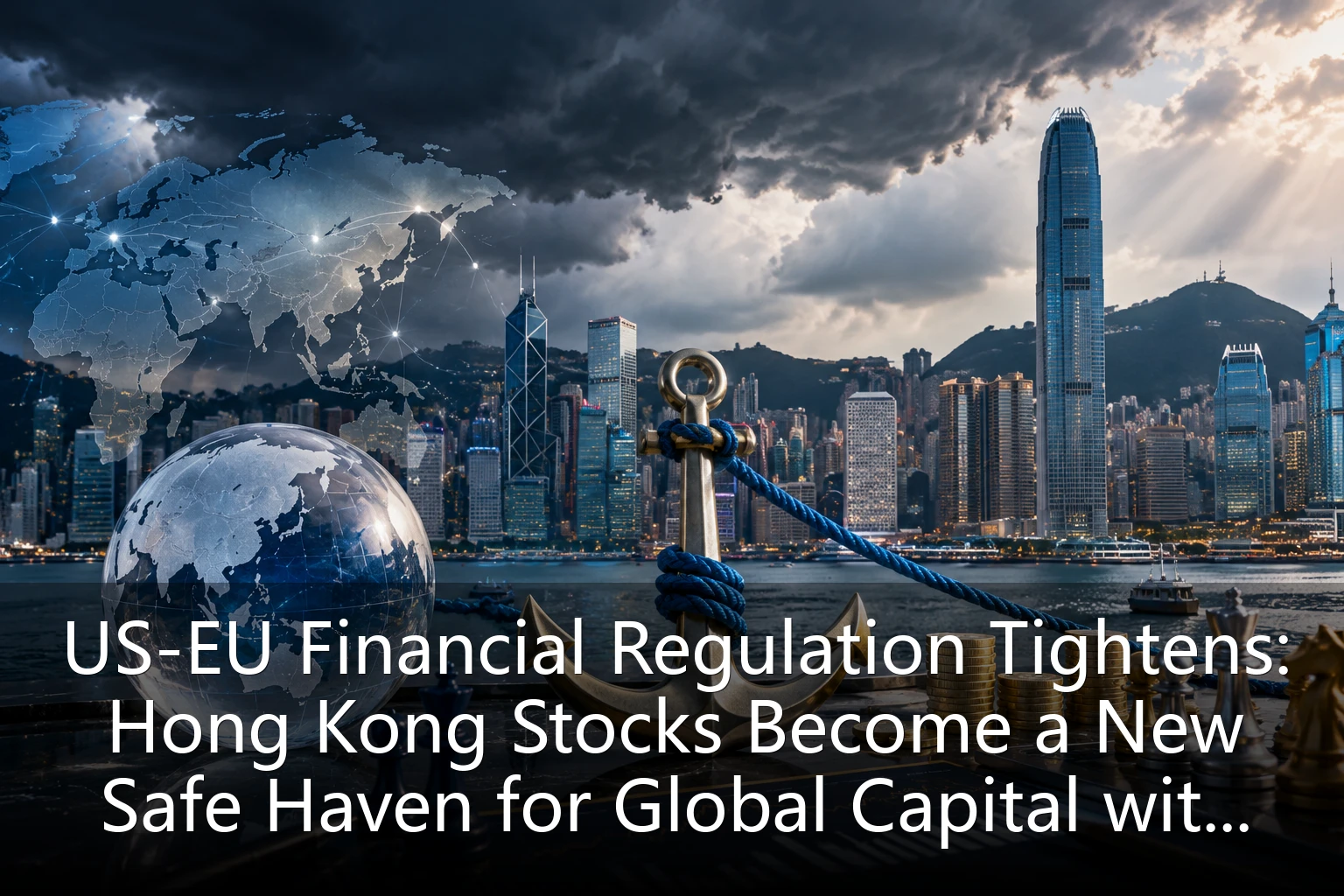
Tighter US-EU Regulation Triggers Global Capital Reallocation, Hong Kong Stocks Surge in Appeal
In early August 2026, global capital markets are undergoing a profound shift triggered by regulation. Recently, the U.S. Securities and Exchange Commission (SEC) and the European Securities and Markets Authority (ESMA) have successively signaled strict oversight of high-frequency quantitative trading, naked short selling, and the over-the-counter derivatives market. Against the backdrop of this abruptly tightened regulatory environment across the ocean, the Hong Kong stock market, with its high degree of marketization and institutional flexibility, is becoming a "safe harbor" for global capital inflows, thanks to its unique institutional advantages.
For many international institutional investors, the appeal of the Hong Kong stock market lies not only in its backing by China's massive economic scale but also in its century-old free-market DNA. At this critical juncture where global financial rules are being reshaped, several core advantages of the Hong Kong market are once again under the spotlight.
1. Flexible Trading Mechanisms: The Irreplaceable T+0 and Mature Short Selling System
The core of the recent US-EU regulatory tightening targets the order cancellation rate of quantitative high-frequency trading and the transparency of short selling mechanisms. Some new rules even propose punitive fees for frequent order cancellations within extremely short timeframes, directly constraining the strategy execution space for quantitative hedge funds in Western markets.
In contrast, the Hong Kong stock market demonstrates strong inclusiveness and resilience in its trading mechanisms:
- No Price Limits and T+0 Turnaround Trading: Hong Kong stocks allow investors to buy and sell the same stock multiple times within a single trading day. This T+0 mechanism not only greatly enhances capital efficiency but also provides ample liquidity for arbitrage funds and quantitative institutions.
- Mature Short Selling Mechanism: Hong Kong boasts Asia's most mature short selling regulatory system. The Hong Kong Exchange regularly updates the list of eligible short selling securities, covering most blue-chip stocks and liquid individual stocks. As calls to restrict short selling grow louder in the West, Hong Kong's transparent securities lending mechanism and reasonable pool of short selling targets offer unparalleled convenience for hedge funds constructing long-short strategies.
- Rich Derivatives Ecosystem: The highly developed Hang Seng Index futures, options, and callable bull/bear contracts market allows international capital to easily employ complex hedging and arbitrage models, which is particularly valuable in the current uncertain macro environment.
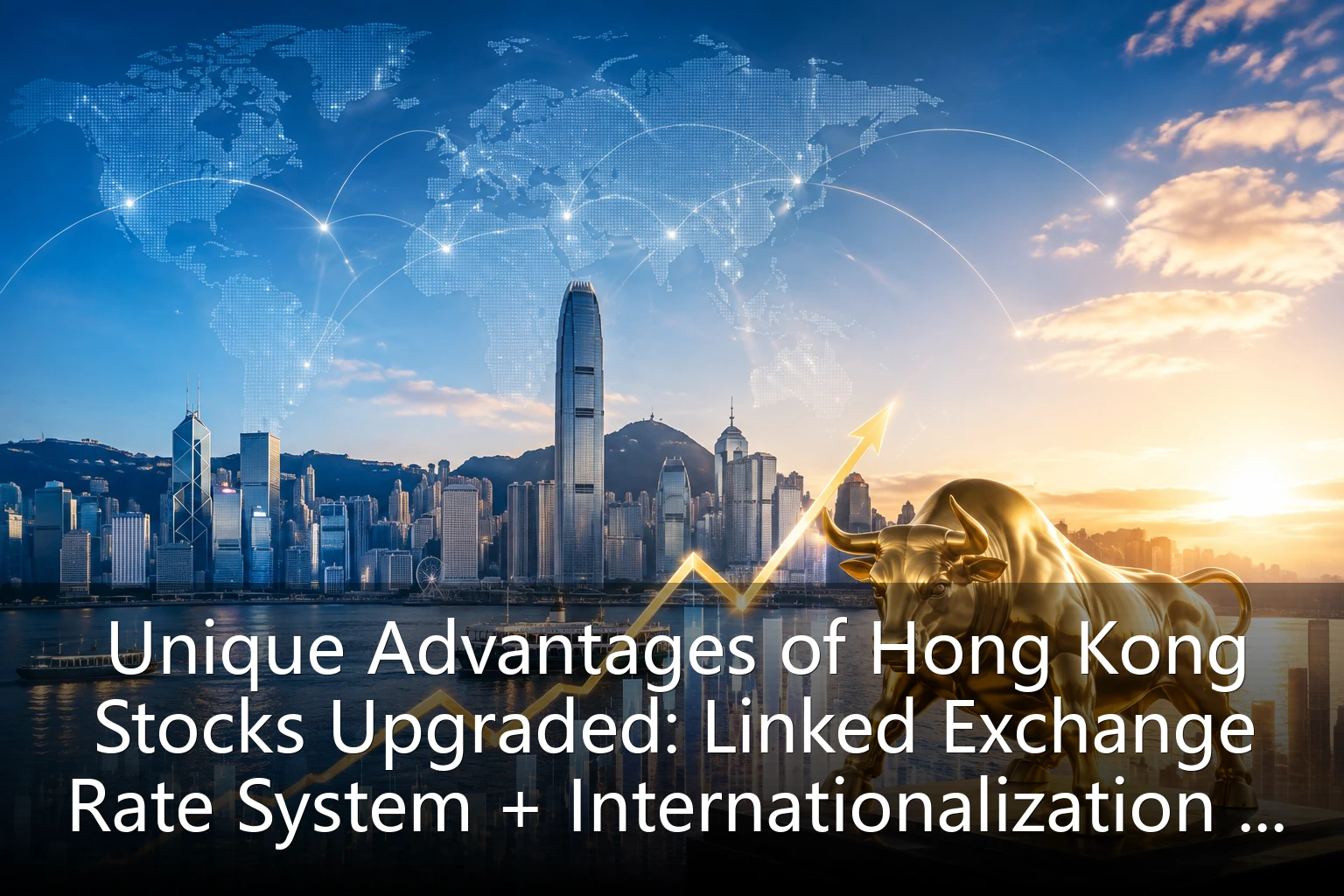
2. Linked Exchange Rate System: The Anchor Against Global Currency Volatility
Recent sharp fluctuations in the Japanese Yen and repeated shifts in Federal Reserve policy expectations have caused severe turbulence in Asia-Pacific emerging market currencies. Against the backdrop of significant depreciation in regional currencies, Hong Kong's linked exchange rate system has once again proven its absolute value as a cornerstone of international finance.
The Hong Kong Monetary Authority maintains the Hong Kong dollar's exchange rate against the US dollar within a band of 7.75 to 7.85 through an automatic interest rate adjustment mechanism. This institutional arrangement provides global investors with three layers of protection:
First, elimination of exchange rate risk. For global sovereign wealth funds and pension funds managing trillions of dollars in assets, investing in Hong Kong stocks requires no additional hedging against Hong Kong dollar exchange rate risk, significantly reducing transaction costs and hedging drag. Second, provision of a liquidity buffer. Under the linked exchange rate system, the Aggregate Balance of the Hong Kong banking system effectively regulates market liquidity, ensuring the Hong Kong stock market maintains deep absorption capacity during extreme market volatility. Finally, an international pricing benchmark. The stability of the Hong Kong dollar makes Hong Kong stocks a precise pricing anchor for foreign investors assessing the risk of Chinese assets. When the mainland's economic fundamentals improve, foreign capital often prioritizes deployment through the Hong Kong stock market.
3. Two-Way Expansion of Stock Connect: Southbound Capital Builds a Solid Valuation Floor
If flexible trading mechanisms and the linked exchange rate system are the "sharp tools" for attracting foreign capital, then the continuously optimized Stock Connect mechanism is the "internal strength" for withstanding external shocks. Since 2026, Stock Connect has deepened reforms by lowering ETF inclusion thresholds and expanding the scope of eligible securities.
Facing recent severe volatility in external markets, southbound capital has once again demonstrated its role as a "ballast stone." Mainland public funds and private equity institutions have maintained net inflows through Stock Connect, not only providing a steady stream of incremental funds to the market but also underpinning the valuations of core assets at key levels. This dual-engine model, where "foreign capital watches the macro and domestic capital watches fundamentals," makes Hong Kong's liquidity structure more robust than ever before.
For investors new to Hong Kong stocks, understanding the capital attributes of Stock Connect is crucial. Southbound capital favors high-dividend, low-valuation central state-owned enterprises and tech leaders with growth potential. This pricing logic, with distinct Chinese characteristics, is gradually reshaping Hong Kong's valuation system, making it less susceptible to sentiment swings on Wall Street.
4. Industry Interpretation: Global Capital Rediscovers Hong Kong's Allocation Value
Multiple international investment banks have pointed out in recent research reports that the Hong Kong stock market is currently in a resonance period of a "valuation trough" and "institutional dividends." In recent years, affected by geopolitical factors, foreign capital had once underweighted Chinese assets. However, with tightening financial regulation in the US and Europe and potentially rising transaction costs, global capital is reassessing the "institutional friction costs" of various markets.
In this dimension, Hong Kong's advantages are particularly prominent. Whether in terms of trading hours aligning with international standards or the internationalization of corporate governance, Hong Kong provides a rare "seamless" platform. Especially for quantitative and hedge funds squeezed out by new Western regulations, the Hong Kong stock market's efficient market microstructure and abundant derivatives liquidity are highly attractive.
Looking ahead, against a backdrop of an uncertain Federal Reserve policy path and a reshaping global trade landscape, Hong Kong stocks, with their unique institutional endowments, are expected to continue absorbing overflow global capital. For investors, now is the time to deeply study Hong Kong's unique advantages and flexibly utilize tools like Hang Seng Index futures, options, and CBBCs. This allows not only finding certainty in a high-volatility market but also seizing the generational opportunity brought by global capital reallocation. sgxcata will continue to track Hong Kong stock capital flows and macro dynamics for you, helping you seize investment opportunities in this complex and changing market.