Mapletree Industrial Trust FY25/26 Full-Year Results: DPU Down 6.3% YoY, IDC Asset Ratio Rises to 57.3%
Foreword
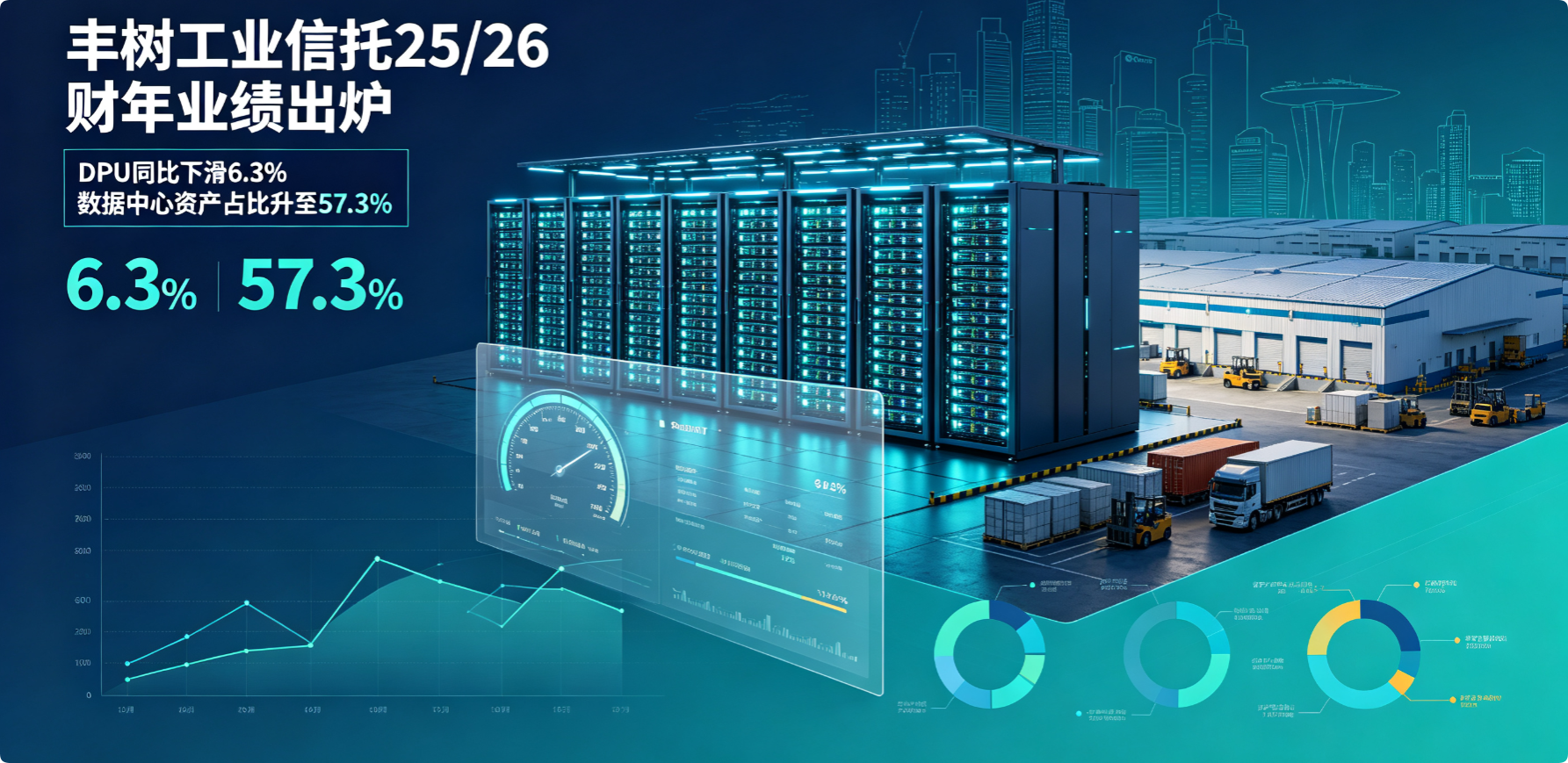
In June 2026, Mapletree Industrial Trust (MINT), an industrial REIT listed on the Singapore Exchange, disclosed its full fiscal year 2025/26 operating results. Affected by a high base of one-off gains from asset disposals in the previous fiscal year and lease adjustments at some North American industrial properties, the trust's full-year distribution per unit (DPU) fell 6.3% year-on-year. At the same time, management continued to reshape the asset structure, divesting batches of traditional inefficient factories and increasing exposure to computing infrastructure. Data center assets' share of the total portfolio rose sharply to 57.3%, making computing assets the core growth pillar of the trust.
1. Key Full-Year Operating Data
-
Distribution PerformanceDPU for the fiscal year fell 6.3% year-on-year, mainly due to a large one-off gain from overseas property disposals in the prior year, with no similar non-recurring income in the current year. Additionally, lease renewal pressure at older North American industrial parks weighed on total rental income.Excluding one-off gains or losses, core operating rental income remained stable, with positive growth from logistics and data center properties in the Asia-Pacific region.
-
Asset Size and Tenant MixAs of the end of the fiscal year, Mapletree Industrial Trust managed global assets with a total value of S$8.3 billion, holding 136 industrial, warehousing, and data center properties worldwide, with over 2,000 corporate tenants covering diversified sectors including manufacturing, cross-border logistics, cloud service providers, and AI computing companies.
-
Major Asset Structure AdjustmentFollowing a full year of continuous asset replacement and acquisitions, the data center asset portfolio expanded significantly, accounting for 57.3% of the trust's total assets, formally surpassing traditional industrial factories and general warehousing to become the largest asset class.Older industrial properties in Europe and the US continue to be divested, with their share steadily shrinking as investment emphasis fully shifts toward the high-growth computing market in Asia-Pacific.
2. Key Asset Disposal Actions During the Year
In June of this fiscal year, the trust completed the sale of a data center asset in Philadelphia, USA, with a transaction price of S$18.7 million, a 4.3% premium over the independent valuation, successfully realizing value appreciation from the existing asset.
The proceeds from this disposal were fully allocated to two directions:
- Acquisition of equity in high-standard Tier 3 data centers in Singapore and Southeast Asia;
- Supplementing operating working capital and optimizing the trust's overall liability structure to control financing costs.
3. Detailed Breakdown of Performance Decline
- Difference in One-off Income Comparison Base
In FY24/25, the trust disposed of multiple mature overseas industrial properties, recording large gains, which raised the DPU base for that year. In FY25/26, the focus was on asset replacement, with fewer large-scale disposals and no equivalent additional income.
- Rental Pressure on Overseas Traditional Factories
Market demand for older factories in non-core North American regions was weak, some tenants reduced leased space, and bargaining power for renewal rents weakened, leading to a slight decline in rental income from this segment.
- Short-term Capital Expenditure Increase for IDC Expansion
Batch acquisitions and renovations of data centers incurred phased capital investment, slightly compressing distributable cash flow in the short term. In the long run, rental income is expected to benefit from the high prosperity of the computing industry.
4. Management's Medium- to Long-Term Strategic Plan
- Continue to Divest Inefficient Traditional Assets
Gradually divest older general-purpose factories in Europe and the US that lack value appreciation potential to reduce drag from cyclical fluctuations and continuously recycle cash flow.
- Heavy Investment in Asia-Pacific Computing Infrastructure
Focus on Tier 3 data centers in Singapore, Vietnam, Malaysia, and Japan as core targets, capturing the dividend from global AI and cloud computing expansion, and further raising the IDC asset share.
- Deploy Cold Chain Warehousing in Southeast Asia
Leveraging RCEP trade growth, opportunistically acquire cold chain logistics assets near ports to create a dual asset portfolio of "data centers + cross-border warehousing" and diversify risk from a single track.
- Maintain Prudent Leverage Levels
Utilize existing sufficient cash reserves and low-cost syndicated loans to strictly control the overall financing rate, ensuring long-term stable distribution capability.
5. Industry Analyst Commentary
Market analysts pointed out that this DPU decline is a one-off base effect disturbance, not a deterioration of fundamentals. Mapletree Industrial Trust's proactive increase in data center exposure aligns with long-term industry trends. AI computing demand has long-term rigidity, and IDC properties offer longer lease terms and faster rental growth compared to traditional industrial factories.
In the short term, overseas assets weigh on income, but after the medium- to long-term asset structure optimization is completed, the trust's distribution level is expected to return to an upward path. Among S-REITs on the Singapore Exchange, industrial trusts with leading computing asset ratios have stronger long-term allocation value.
6. Future Catalysts to Watch
- Multiple Southeast Asian data center acquisitions to be completed in the second half of the year, further increasing computing asset weight;
- Continued disposal of inefficient North American factories, steadily increasing investable cash flow;
- After market rate cut expectations materialize, the trust's financing costs will decrease, releasing more distributable income;
- Singapore's local high-end warehousing and IDC asset rents continue to rise steadily, hedging against overseas business fluctuations.